Tropical Island SVG Embroidery Review
As a designer who spends half my life digitizing and the other half troubleshooting why that perfect design didn’t translate to fabric, I approach every new embroidery file with a mix of optimism and skepticism. The market is flooded with clip art that looks beautiful on a screen but falls apart under the needle. Today, I’m putting the Tropical Island SVG through its paces. This isn’t just about whether it looks cute; it’s about whether it works as a viable asset for your craft business, your Etsy shop, or your next personalized gift.
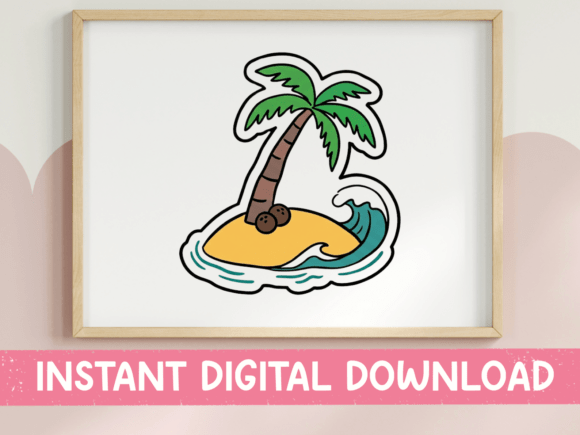
The concept is straightforward: a cheerful tropical island sticker featuring a tall palm tree leaning over a sandy shore, coconuts at the base, and a bright teal wave curling around the edge. It sits in a clean sticker shape. On paper, this screams summer. But in embroidery? Summer can be tricky. Let’s break down how this machine embroidery design holds up when we move from digital preview to finished product.
First Impressions and Visual Mood
The first thing that strikes me about the Tropical Island SVG is its inherent simplicity. In the world of graphics and T-Shirt Designs, minimalism is often king because it translates better to limited color palettes. This design doesn’t try to be a photorealistic landscape. Instead, it leans into a graphic, illustrative style. That is a smart choice for embroidery.
The mood is undeniably upbeat. The leaning palm tree suggests a relaxed, breezy vibe, which makes this an excellent candidate for custom apparel like beach cover-ups, linen shirts, or lightweight tees. The inclusion of the "sticker" shape is also a strategic move. It creates a defined boundary, which helps the eye focus on the central elements—the palm, the sand, the wave—without worrying about where the design ends. For an Etsy seller, this means less confusion in your mockups and a clearer value proposition for buyers looking for a cohesive look.
However, we must talk about the teal wave. Teal is a fantastic color, but it can sometimes get lost in certain lighting or on specific fabrics. If you are planning to use this for holiday embroidery or seasonal collections, keep in mind that while it fits perfectly in July, it might feel out of place in December unless paired with very specific accent colors.
Real-World Application: The Tote Bag Test
To truly evaluate any embroidery project, I always imagine the end use. Let’s say I am preparing a batch of custom canvas tote bags for a local craft fair. These bags need to be durable, visually striking, and easy to produce quickly. How does the Tropical Island SVG perform here?
Canvas is a textured fabric, which can be unforgiving. Small details tend to disappear. Fortunately, this design relies on bold shapes rather than intricate linework. The solid fill of the palm fronds and the sweeping curve of the wave mean that even on a slightly rough weave, the design will remain legible. The "clean sticker shape" acts as a frame, ensuring that the embroidery doesn’t look like it’s bleeding off the edge of the bag.
For a tote bag design, placement is key. Centered on the front panel, this design would serve as a strong focal point. It pairs naturally with neutral tones like beige, white, or navy canvas. The contrast between the natural fiber texture and the smooth, vibrant threads of the fill stitch areas will create a tactile appeal that customers love to touch. This tactile quality is crucial for handmade product sales; it signals quality and care.
Furthermore, this design works beautifully for personalized gifts. Imagine adding a name in a simple script above the palm tree. The negative space within the sticker shape allows for text integration without cluttering the main illustration. This versatility increases the perceived value of your small shop product, allowing you to offer both standard and customized versions.
Where to Exercise Caution
No design is perfect for every surface. While the Tropical Island SVG is robust, there are specific scenarios where you should proceed with caution.
- Small Hoop Sizes: If you plan to shrink this design down significantly for something like a baby onesie or a tiny patch, you need to inspect the small details. The coconuts and the tips of the palm leaves may become indistinct if the stitch density is too high for the reduced scale. Always test at 100% size first, then scale down only if the machine handles the smaller stitches cleanly.
- Stretchy Fabrics: Knits, such as those used for sweatshirt embroidery or athletic wear, require careful stabilization. A large, dense design like this can pucker if not backed with the correct stabilizer. Use a cut-away stabilizer for stretchy materials to ensure the design remains flat after washing.
- Dark Fabric: The teal wave might lack contrast against dark navy or black backgrounds. You may need to add a light-colored underlay or change the thread color to a brighter cyan or aqua to make the wave pop. Conversely, on white fabric, the teal will stand out sharply, which is ideal for apparel decorators aiming for a crisp, modern look.
- Curved Surfaces: Applying this to a cap or a curved hat brim can distort the circular nature of the sticker shape. The palm tree might lean unnaturally if the fabric tension isn't perfect. For curved applications, consider simplifying the design or using an applique design technique to reduce bulk.
Technical Considerations for Designers
Before uploading this to your online store or starting production, there are a few technical checks every professional should run.
- Stitch Density Check: Look closely at the fill stitch areas. Are they too dense? Excessive density leads to thread breaks and needle deflection. If the design feels heavy, consider reducing the stitch length or opting for a lighter underlay pattern.
- Thread Color Contrast: Mock up the design in black and white. This helps you see the value contrast between the different elements. If the sand and the wave have similar values, they will merge into a muddy blob. Ensure distinct separation between the background (sky/sticker border) and the foreground elements.
- Running Stitch vs. Satin Stitch: Determine where each stitch type is best used. The outline of the sticker shape likely benefits from a satin stitch for a clean finish, while the palm leaves might look more organic with a combination of running stitch and fill. Avoid using satin stitch for long, thin lines as they can twist.
- Licensing and Commercial Use: This is critical. Just because you bought the digital embroidery file doesn’t automatically grant you the right to sell the finished items. Check the license terms carefully. Some licenses allow unlimited commercial use, while others restrict the number of items sold or prohibit resale entirely. Protect your creative entrepreneur business by confirming these details before listing your design assets.
Final Verdict
The Tropical Island SVG is a solid, versatile addition to any embroiderer’s library. Its strength lies in its clarity and thematic appeal. It avoids the pitfalls of overly complex designs that fail to render well on fabric, instead opting for bold, recognizable shapes that communicate their message instantly.
It is particularly well-suited for summer collections, beach-themed events, and casual custom apparel. With proper attention to fabric choice, stabilization, and thread contrast, this design can elevate a simple tote bag or t-shirt into a premium finished product that customers are proud to wear or carry.
For hobbyists, it offers a satisfying stitching experience with quick turnaround times. For commercial embroidery professionals, it provides a reliable, low-risk design that appeals to a broad audience. Just remember to test on scrap fabric first, verify your licensing, and let the design breathe on the garment. When executed correctly, this little island scene brings a burst of sunshine to any project.