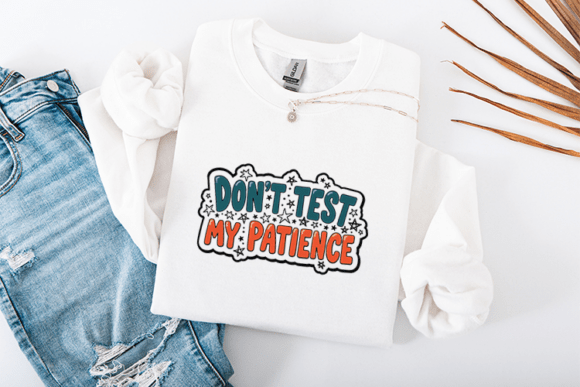
Don t Test My Patience SVG Embroidery Review
When I first pulled up Don t Test My Patience SVG, my immediate reaction wasn’t about the text itself, but about the attitude radiating from the layout. As a designer who has stitched thousands of files for everything from boutique branding to personal gifts, I know that not every graphic translates well to thread. Some designs look great on a screen but fall apart under the needle. This particular piece, however, caught my eye because it leans heavily into a groovy retro aesthetic with bold, sticker-style bubble typography. It feels less like a standard quote and more like a statement piece designed to be seen.
The visual personality here is sharp, sarcastic, and undeniably fun. The surrounding elements suggest a frame or border that complements the central message without overwhelming it. For an embroidery project, this balance is crucial. If the decorative elements are too intricate, they can turn into a muddy mess of stitching on smaller hoops. But if they are too sparse, the design lacks presence. In this case, the "sticker-style" approach implies clean lines and distinct shapes, which is music to an embroiderer’s ears. It suggests high contrast and clear boundaries between colors, making it a strong candidate for a machine embroidery design that needs to hold its own in a crowded market.
Real-World Application: From Screen to Stitch
I recently found myself preparing a batch of custom merchandise for a local craft fair, specifically targeting young professionals and creative entrepreneurs who appreciate humor in their daily wear. I needed something that could serve as a personalized gift or a standalone handmade product for customers looking to add a bit of edge to their wardrobe. Don t Test My Patience SVG fit that niche perfectly.
I decided to test this on a heavyweight cotton canvas tote bag. The structure of the bag provided a stable surface, allowing the fill stitch areas of the bubble letters to lay flat and smooth. The retro color palette—likely featuring muted tones mixed with vibrant accents—poppped against the neutral background. The result was a tote bag design that felt cohesive and professional. Customers at the fair gravitated toward it immediately. It wasn’t just a bag; it was a conversation starter. The sarcasm of the quote paired with the playful font created a vibe that resonated with people who value authenticity and wit.
Beyond totes, I also considered how this would translate to apparel. A sweatshirt embroidery on a heather grey pullover came to mind. The thickness of the sweatshirt fabric supports the density required for bold lettering, ensuring the design doesn’t pucker or distort. However, I had to be mindful of the placement. Centered chest placement works best for this kind of custom apparel, keeping the focus on the message while maintaining a balanced silhouette. It’s the kind of item that sells well during holiday seasons or as a funny office gift, tapping into the holiday embroidery market where relatable humor drives sales.
Technical Considerations for Embroidery Designers
While the concept is strong, translating vector graphics into a functional embroidery file requires careful technical judgment. The bubble typography, while visually striking, presents specific challenges regarding stitch density and digitization.
First, let’s talk about the stitch density. Bubble letters often require large areas of coverage. If the digitizer sets the density too high, the fabric will become stiff and unwearable, especially on delicate materials. Conversely, if the density is too low, the underlying fabric might show through, ruining the crispness of the retro aesthetic. I always advise testing the design on scrap fabric first to check how the thread colors interact with the base material. On dark fabrics, you may need an additional layer of stabilizer or a different thread weight to ensure opacity and vibrancy.
Another critical factor is the hoop size. This design appears to have a moderate width due to the surrounding decorative elements. If you are working with a smaller hoop, such as those used for baby embroidery on onesies or small embroidered patches, you might need to scale down the design significantly. Scaling too much can compromise the readability of the text and blur the fine details of the border. It is essential to confirm the optimal hoop size before starting production to avoid resizing issues that could distort the aspect ratio.
For those considering using this as an applique design, the bold outlines of the bubble letters provide excellent anchor points. Applique can add texture and dimension, making the retro style feel even more tactile. However, this adds complexity to the workflow. You’ll need to manage multiple thread colors and potentially use a combination of satin stitch for edges and running stitch for finer details. Ensure your machine settings are adjusted for the added bulk, particularly if you are layering applique on stretchy fabrics like jersey knits.
Fabric and Surface Compatibility
Not all surfaces are created equal. While this design shines on structured items like totes and sweatshirts, it requires caution on curved or textured surfaces. Attempting to stitch this on a baseball cap, for instance, demands precision. The curvature of the front panel can distort straight lines, so proper hooping techniques and possibly a curved-hoop attachment are necessary. Similarly, textured fabrics like terry cloth or heavy waffle knits can obscure the details of the graphic. The needle penetration might struggle, leading to skipped stitches or uneven tension.
Thin fabrics pose another risk. Without adequate support, the pull of the fill stitch can cause puckering. Always use a cut-away stabilizer for permanent projects, especially if the finished product will undergo frequent washing. For temporary applications or lightweight materials, a tear-away stabilizer might suffice, but it must be removed carefully to avoid damaging the fabric threads.
Marketability and Brand Consistency
From a business perspective, Don t Test My Patience SVG offers strong potential for Etsy sellers and small shop owners. The niche of humorous, boundary-setting quotes is evergreen. People love to express their personalities through what they wear and carry. This design taps into that desire by offering a product that is both fashionable and functional.
When creating printable mockups for your listings, focus on lifestyle shots that show the design in context. A photo of someone carrying the tote bag in a coffee shop or wearing the sweatshirt in a casual setting helps buyers visualize the finished product. Use lighting that highlights the texture of the embroidery and the vibrancy of the colors. This attention to detail builds customer trust and enhances the perceived value of your craft business.
Furthermore, consider how this design fits into your overall brand identity. If your shop focuses on playful, retro-inspired goods, this design is a natural fit. It aligns with themes of nostalgia and self-expression. For shops focused on minimalist or corporate branding, it might be too bold. Understanding your audience is key to selecting the right design assets for your inventory.
Licensing and Commercial Use
Before adding this to your catalog, verify the licensing terms. Even if you are purchasing a digital embroidery file, commercial rights are not always included by default. Ensure you have permission to sell finished items made from this design. Reselling the digital file itself usually requires a separate license. Clear licensing protects your business from legal issues and ensures you are respecting the original creator’s work.
Final Verdict
Don t Test My Patience SVG is a versatile and engaging design that bridges the gap between digital graphics and tactile embroidery. Its bold typography and retro charm make it suitable for a wide range of products, from apparel decorators creating custom tees to hobbyists making unique gifts. By paying attention to technical details like stitch density, stabilizer choice, and fabric compatibility, you can bring this design to life with professionalism and flair. It’s a smart addition to any designer’s toolkit, offering both creative satisfaction and commercial potential.