Child Crafting Wall Sticker Art Review
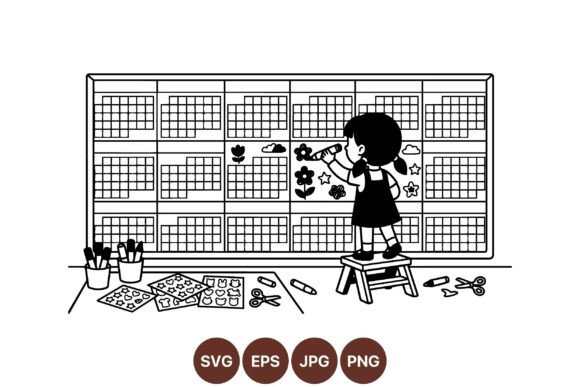
As a designer who spends more time than I care to admit staring at stitch density charts and thread color palettes, I approach every new embroidery file with a mix of optimism and skepticism. We all know the drill: a graphic looks stunning on a screen but turns into a muddy, tangled mess once it hits the hoop. That is exactly why I am taking a close look at Child Crafting Wall Sticker Art. This piece, categorized under Illustrations and Graphics, promises a monochrome vector style featuring a little girl coloring on a large wall calendar, surrounded by scattered crayons and stickers.
At first glance, the mood is undeniably peaceful and creative. But does that translate to a high-quality handmade product? Let’s break down how this design performs in real-world embroidery scenarios, from custom apparel to boutique merchandise.
First Impressions and Visual Personality
The composition of Child Crafting Wall Sticker Art relies heavily on its line work. Since it is described as a monochrome vector style, the visual personality is clean, nostalgic, and gentle. For an embroiderer, this is both a blessing and a challenge. The lack of complex gradients or subtle shading means the design will likely hold up well against the limitations of thread. However, the "scattered" nature of the crayons and stickers suggests a busy layout.
When I imagine this stitched out, I see a design that leans towards narrative rather than bold branding. It feels less like a logo and more like a storybook illustration. This makes it perfect for products where emotional connection matters more than immediate recognition. The peaceful vibe suggests it would fit beautifully in a nursery setting or as a thoughtful gift for parents who value creativity and quiet moments.
Real-World Application: Where Does It Shine?
I recently had a client request a personalized gift for a toddler’s birthday—a custom embroidered tote bag that could double as a travel activity kit holder. Child Crafting Wall Sticker Art immediately came to mind. Here is how I see this design performing across various categories:
- Custom Apparel and Sweatshirts: Placed on the back of a child’s sweatshirt or centered on a baby onesie, the vertical orientation of the girl on the stool works well. The monochrome theme allows for versatile thread colors; you could use soft pastels for a baby item or stark black and white for a more modern, graphic look.
- Tote Bag Design: As mentioned, this is a natural fit. A canvas tote featuring this scene adds a layer of whimsy. The scattered elements (crayons, stickers) can be interpreted as playful accents, making the bag feel curated and special.
- Baby Embroidery and Nursery Decor: On a pillow cover or a quilted blanket, the detailed line work of the calendar and flowers adds texture without being overwhelming. It serves as a gentle focal point in a room full of bright colors.
- Holiday Embroidery: This design has a timeless quality that fits well during the holiday season as a gift for grandparents or godparents. It represents childhood memories, which resonates deeply with buyers looking for sentimental personalized gifts.
For Etsy sellers and small shop owners, this asset offers a unique selling proposition. Unlike generic text-based designs, this provides a character-driven aesthetic that stands out in search results. It appeals to the demographic of parents who want their children’s clothing to reflect creativity and joy.
Technical Considerations and Stitching Challenges
No design is perfect, and knowing where to exercise caution is what separates a pro from a hobbyist. When digitizing or preparing Child Crafting Wall Sticker Art for production, several factors need careful attention.
First, consider the stitch density. If the original vector includes fine lines for the flower details or the text on the calendar, these areas may require a running stitch or a very light satin stitch. On textured fabrics, such as heavy denim or terry cloth, these fine details might get lost or cause puckering. Always test on scrap fabric first to ensure the needle doesn’t skip or break.
The "scattered" elements are another point of focus. While they add charm, they also create negative space. In a small hoop size, cramming too many small details can result in a cluttered look. I recommend using a larger hoop size to give each element—whether it’s the girl, the stool, or the individual stickers—room to breathe. This ensures that the finished product looks crisp and intentional, not rushed.
Fabric choice is critical. Dark fabrics can make monochrome designs disappear unless you use a contrasting thread color or a backing stabilizer that shows through slightly. Conversely, on light fabrics, a white thread might vanish if the background isn’t pure white. Testing in black and white mockups before committing to a full production run is a smart move for any commercial embroidery project.
Where to Use With Caution
There are specific applications where this design might struggle:
- Small Hoop Sizes: Avoid trying to fit the entire scene into a 4x4 inch hoop if possible. The detail level requires enough surface area to be legible.
- Stretchy Fabrics: Items like caps or fitted hats can distort the perspective of the girl standing on the stool. The curvature might make the calendar look warped unless the digitization accounts for the curve properly.
- Dense Stitch Areas: If the design uses heavy fill stitches for the flowers or the calendar background, it may become stiff and uncomfortable, especially on baby clothes. Lighter stitch types are preferable for items that touch skin frequently.
Impact on Brand and Customer Trust
Using high-quality design assets like this one directly impacts customer trust. Buyers can often tell when a design is poorly executed or lacks thoughtfulness. Child Crafting Wall Sticker Art, with its clear theme and peaceful aesthetic, communicates professionalism. It suggests that the seller cares about the narrative behind their products.
For craft business owners, this design enhances the perceived value of the item. A simple plain tote becomes a keepsake when adorned with a charming, story-rich illustration. It encourages sharing on social media, as customers love to post photos of unique, handmade items that evoke emotion. This organic marketing potential is invaluable for digital product sellers and physical goods creators alike.
Practical Designer Notes
Before adding this to your library or starting a production run, keep these practical tips in mind:
- Test on Scrap Fabric: Always run a sample on the actual fabric you plan to use. Check for thread breaks, tension issues, and how the stabilizer interacts with the material.
- Review Stitch Density: Ensure the digitized version doesn’t have overly dense areas that could cause bulkiness or fabric distortion.
- Check Licensing: Confirm whether you have the rights to sell finished items made from this machine embroidery design. Commercial licenses vary, and clarity here protects your small shop product business.
- Thread Color Contrast: Experiment with different thread colors to see how they interact with the monochrome lines. Sometimes a slight tint can enhance depth without losing the clean vector look.
- Inspect Small Details: Zoom in on the digital preview. Are the crayon tips distinct? Is the text on the calendar legible? If not, you may need to simplify the design or increase the scale.
In conclusion, Child Crafting Wall Sticker Art is a strong candidate for designers looking to add warmth and narrative to their embroidery projects. It balances visual interest with technical feasibility, provided you respect the constraints of hoop size and fabric type. For those willing to put in the preparation time, the payoff is a beautiful, marketable handmade product that connects with customers on a deeper level.